


Japanese architectural and construction techniques are often an important inspiration for Western designers. This is because the solutions produced using them combine extraordinary decorative qualities with impressive durability and robustness. A model example of a legendary technique originating from the Land of the Cherry Blossom that allows for uncommon effects is wood charring, known as Shou Sugi Ban or Yakisugi.


Until a dozen years ago, it remained a rather exotic, niche concept for European designers, but over time it began to rapidly gain popularity. Nowadays, Shou Sugi Ban is held in high esteem on the Old Continent, where the originality and beauty of charred wood according to its principles are valued, and other valuable assets of the material are emphasised. If you are interested in the history of Shou Sugi Ban and the characteristics of the wood, we invite you to read our article, in which we introduce you to this legendary method.
Shou Sugi Ban – an uncommon technique with centuries of history
The history of Shou Sugi Ban, referred to as Yakisugi in some parts of Japan, dates back several hundred years. Some experts date the first constructions created using fired wood to the eighteenth century, while others are convinced that the technique itself is older, with the eighteenth century marking the heyday of its popularity on the various Japanese islands.
In the past, all Japanese houses were built of wood, shaped by the community’s deep-seated fear of fire. Engineers of the time realised that charring the wood would slow or even stop a fire. It turns out that if the surface is already charred, it can begin to redden in an embers-like manner, but it does not succumb to the flames. The Japanese designers also came to another important conclusion shortly afterwards, namely:
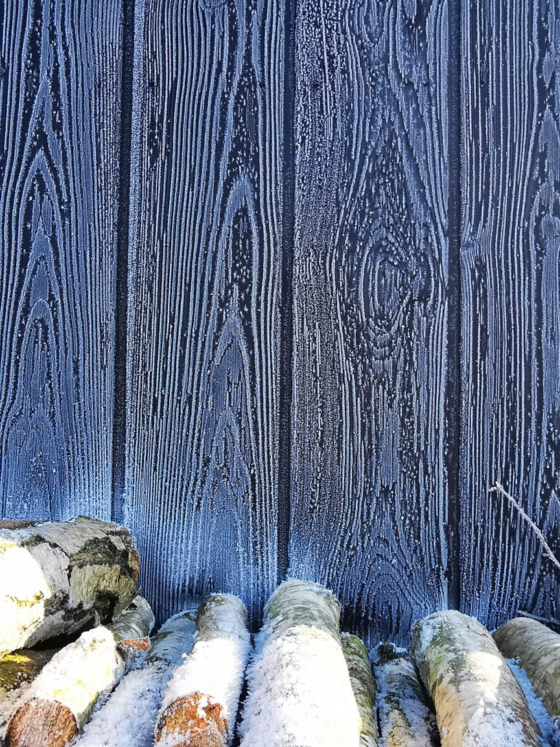
- heat treated wood is resistant to fungi and mould,
- wood treated with Shou Sugi Ban is resistant to pests, which are not interested in it due to the lack of nutritional values of interest to insects.
The wide range of benefits of wood charring meant that the traditional Shou Sugi Ban method was successively developed in Japan until the mid-20th century.
How popular is Shou Sugi Ban today?
The legendary Japanese wood-firing technique Shou Sugi Ban has been gradually modernised over the years. The biggest contributors to this process were the Canadians and the Scandinavians, who introduced various improvements and innovations to Shou Sugi Ban. Interestingly, their interest in the Yakisugi method was largely due to the aesthetics and unique nature of the burnt wood, and secondarily dictated by the technical properties of the material.
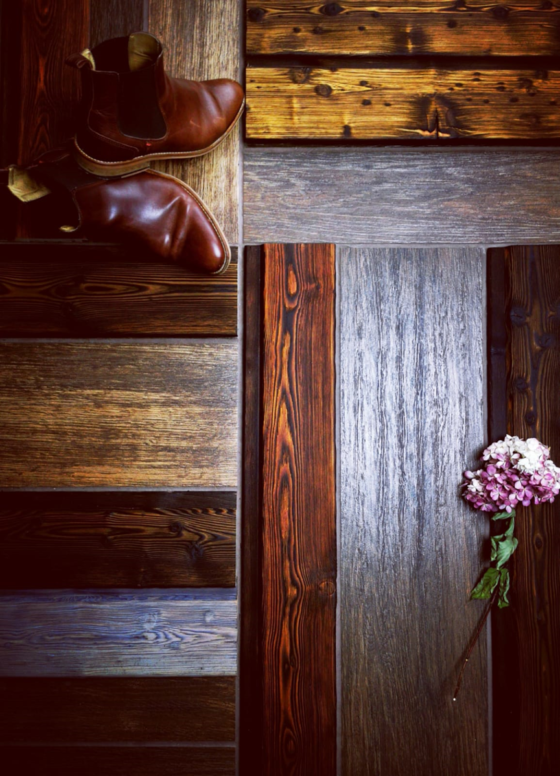
The Shou Sugi Ban technique has also been highly successful in another European country, more specifically France. How do designers there exploit the potential of charred wood? Sometimes it is used to create an intriguing aesthetic contrast, as can be seen in the case of more expensive houses whose owners want their building to stand out from the rest. Sometimes architects aim for just the opposite effect, i.e. a perfect stylistic integration of the building with neighbouring buildings or the natural surroundings.
The latter approach is particularly encountered in Brittany and Savoy, where wooden facades are more common than in other French regions. Interestingly, in France, the wood is not necessarily burned in a deep way, following Japanese tradition, but often the surface is simply tanned, which helps to emphasise the natural aesthetics of the grain.
Shou Sugi Ban has gained a wide following in Poland too. Enthusiasts of the aesthetics and properties of high-grade fire tempered wood can obtain it from Atelier TwentyOne. We have developed a proprietary method of wood tanning, which is a development of the legendary Japanese Shou Sugi Ban technique. Our technological process combines the best of traditional patterns with innovative improvements to achieve even more perfect results in terms of both technical performance and visual appeal. To carry out our process, we use a specially made carbonisation furnace, with which we can produce an evenly charred surface on the wood guaranteeing the material its unique properties. All this ensures that our charred wood combines an original appearance, high resistance to negative external influences with an impressive lifespan of up to more than 80 years and low maintenance requirements.
What are the main advantages of wood fired using the Shou Sugi Ban technique?
Wood tempered with fire, according to the principles of the Shou Sugi Ban technique, delights designers from all over the world with a number of unique advantages. Which are the most noteworthy?
The main advantage of Shou Sugi Ban-treated wood is its strength and durability. It is harder than solid wood and has a high resistance to fire and waterlogging, as well as other hazards such as pest intrusion and decay. A major advantage of fire-fired wood is its lifespan, estimated at around 80 years, which is much better than many other ways of treating this raw material.
Worthy of note is undoubtedly the fact that Shou Sugi Ban is a completely natural method by which different shades of wood can be obtained, depending on, among other things:
- the degree and time of charring,
- the brushing strength,
- the application of a particular oil or glaze.
The wood obtained in the firing process can, for example, be deep black, stand out with grey or blue accents or retain part of its original shade.
The ecological value of the Shou Sugi Ban method is also very important. At Atelier TwentyOne, we only use wood sourced from sustainably cultivated forests, and the tanning process itself is environmentally friendly and does not require the use of potentially harmful chemicals.
Historically, the Japanese valued charred wood primarily for its functional properties. Nowadays, not only is the practical appeal of products made from wood obtained using the Shou Sugi Ban technique recognised, but attention is also being paid to their decorative aspect. Many designers see charred boards as an inexhaustible source of inspiration that offers much more than just eye-catching black. The unquestionable advantage of charred wood is its versatility – it can be characterised by different shades, and can impress with a matt finish or please the eye with an attractive sheen. Its unique aesthetics, combined with excellent durability and resistance to various external factors, make it suitable for both the creation of elegant façades and unusual finishing of stylish interiors. It is also suitable for the creation of unique furniture, which can serve as a practical decoration for the room it is placed in for many years. When choosing heat treated wood from Atelier TwentyOne, the only limit is your imagination!
What types of wood do we char at Atelier TwentyOne?
As Atelier TwentyOne, we offer several different types of wood for our customers to choose from. What types of wood can be charred? These include only carefully selected wood species, such as:
- Accoya,
- Douglas fir,
- Siberian larch,
- Scandinavian spruce,
- Thermo pine.
Whichever of the above proposals you decide on, you are sure to gain an aesthetically pleasing and durable solution to realise even the most demanding design concepts.
What are the uses of our wood treated with the enhanced Shou Sugi Ban technique?
At Atelier TwentyOne, we offer exceptional fire-fired wood for a wide variety of applications. Our range includes extremely durable and beautiful solutions from categories such as:
- charred facade boards,
- burnt wood and tanned wood for interiors,
- charred decking,
- charred fencing,
- tanned wood furniture.
Feel free to get in touch and discover the great potential of our one-of-a-kind charred wood products.