


Wabi Sabi style is a concept that is increasingly emerging in the context of interior design, but its roots run deep in the Japanese philosophy of life. Penetrating design spaces around the world, Wabi Sabi offers more than just an aesthetic – it is an approach to life that celebrates naturalness, simplicity and the beauty of transience. In this article, we’ll explore Wabi Sabi, what it means, its significance, and how to incorporate this style into interiors to create spaces full of peace and harmony.
Wabi Sabi – what does it mean?
Wabi Sabi are two separate concepts that come together to form a single entity. Wabi refers to simplicity, modesty and harmony with nature. Sabi, on the other hand, is an acceptance of transience, imperfection and the fact that nothing lasts forever. Together, they form a philosophy that focuses on authenticity and the beauty of imperfection. In contrast to trends that focus on the pursuit of perfection, the Wabi Sabi style accepts the passage of time and its effect on the objects around us.
Wabi Sabi – basic features of the style
Wabi Sabi is based on a few key principles that define its aesthetics and philosophy of life. To better understand Wabi Sabi what it means, it is helpful to know the key features of this style.
Imperfection as an advantage
One of the basic tenets of Wabi Sabi is the acceptance that nothing is perfect. In Japanese tradition, ageing and wear and tear on materials are seen as natural and beautiful. Scratches on ceramics, cracked wood or faded fabric take on value over time, highlighting the history and character of objects. Therefore, if you want to create a Wabi Sabi-style living room, opt for objects that have a past and are not afraid to show its traces.
Naturalness and simplicity
Wabi Sabi interiors reflect closeness to nature. Instead of synthetic materials, those with organic origins – wood, stone, ceramic, cotton or linen – are preferred. A perfect example is charred wood, which fits perfectly with the Wabi Sabi aesthetic. Such wood is not only natural, but thanks to the process of burning, it acquires a unique, raw look that emphasises the transience and authenticity of the material.
Silence and space
Interiors decorated in the Wabi Sabi style aim to create an oasis of calm and reflection. Rather than an overabundance of objects and decorations, empty spaces are preferred to allow the eyes and mind to rest. This approach promotes tranquillity and a focus on the present moment.
Colours of the Earth
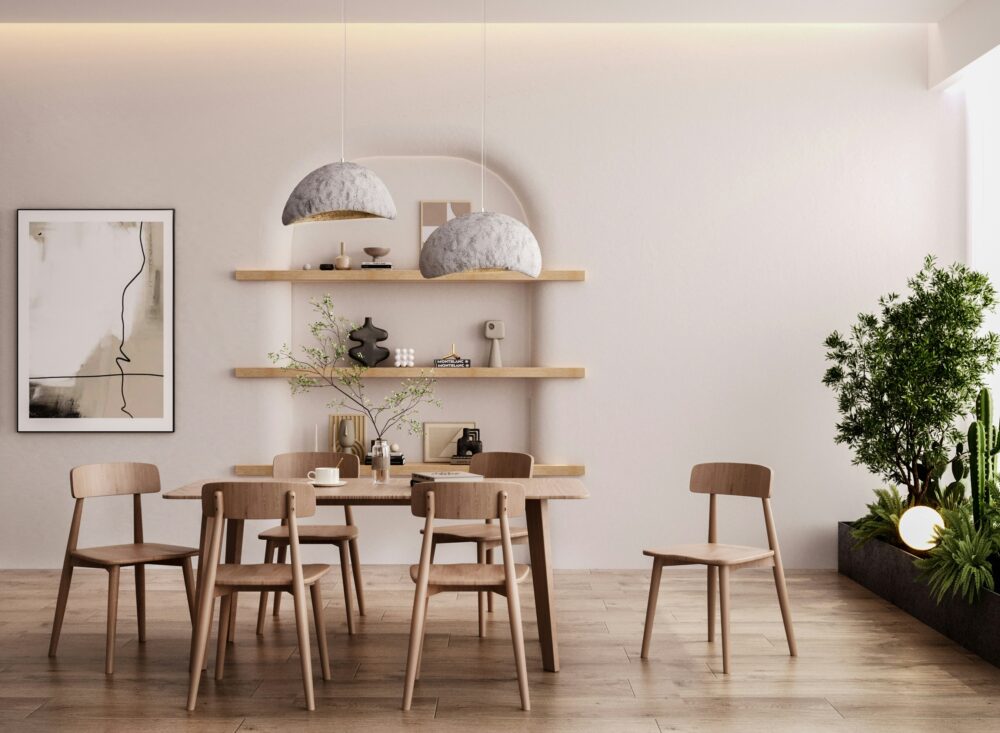
The colours in Wabi Sabi’s interiors are muted and inspired by nature. The colour palette consists of shades of beige, brown, grey, green and white. Intense , bright colours that could disturb the peace and harmony of the interior are avoided. A wall in the Wabi Sabi style is often covered with raw materials such as plaster or clay, which adds texture and naturalness.
Wabi Sabi importance in interior design
The Wabi Sabi style in interior design is not only an aesthetic, but above all a philosophy of life. Its importance lies in its appreciation of authenticity, natural materials and simplicity. Spaces decorated in this style are conducive to tranquillity and contemplation, allowing us to disconnect from the hustle and bustle of everyday life and focus on what is really important.
How do you bring Wabi Sabi into your interior?
To create a Wabi Sabi-style interior, it is helpful to follow a few simple rules:
- Choose natural materials – wood, stone, linen or cotton are key to the Wabi Sabi style. You might consider using Shou Sugi Ban, a wood charring technique that gives it a unique, raw look;
- Accept imperfections – not everything has to be perfect. Items with scratches, cracks or signs of ageing will add authenticity and character to the interior;
- Minimalism – Wabi Sabi is all about the aesthetics of simplicity. Rather than an excess of decoration, rely on a few well-chosen elements that have a special meaning for you;
- Natural colours – a muted colour palette inspired by nature is the basis of the Wabi Sabi style. You can use raw wall finishes, such as plaster or clay, to emphasise the naturalness of the walls;
- Charred wood – bring fire-tempered wood indoors or use charred wood furniture, which fits perfectly with the Wabi Sabi aesthetic.
Wabi Sabi style living room – how to decorate it?
Decorating a living room in the Wabi Sabi style requires, above all, an approach full of moderation. It is important that every element has a purpose and contributes something to the space. Do away with excess decoration in favour of a few key items. A sofa in natural fabric, a wooden table with clear signs of wear and tear and soft lighting can create a harmonious whole. It’s also worth considering charred facade boards as a decorative element to add a raw feel to the interior.
To fully reflect the spirit of Wabi Sabi, it is also crucial to maintain a space that ‘breathes’. Avoid excess furniture and accessories to make the living room exude calm and harmony. Exposed walls with textured surfaces, natural fabrics on curtains or soft cushions can subtly complement the space. It’s also a good idea to add potted plants with organic shapes to bring a vibrant, natural energy into the space without disrupting the minimalism.
Wabi Sabi style wall – what finish to choose?
Walls in Wabi Sabi interiors often have a raw, natural look. They can be covered with plaster, clay or even raw concrete, which emphasises the authenticity and imperfection of the material. It is also worth considering the use of fire-tempered wood, which gives the interior a unique, rustic look. You can find inspiration in the article: Charred wood façade: Is it worth it?
An additional element that enhances the Wabi Sabi aesthetic can be the raw wood structure used not only inside, but also outside. Charred wood fencing fits perfectly into this aesthetic, complementing the space with a cohesive, organic structure and adding an element of natural beauty.
Summary
Wabi Sabi is a philosophy that celebrates authenticity, simplicity and the beauty of transience. Wabi Sabi what does it mean? It’s all about accepting that nothing is perfect or permanent. By introducing Wabi Sabi elements into your interior, you will create a space full of peace, harmony and natural beauty. Look out for fire-tempered wood, which fits perfectly with the Wabi Sabi aesthetic, as well as minimalism and raw materials. You can read more about the use of firewood techniques in our articles:
- What should Shou Sugi Ban’s charred wood be finished with?
- Charring wood instead of waterproofing – Is it worth it?
- History and advantages of Shou Sugi Ban
- Shou Sugi Ban: choosing the right wood for a timeless finish?
- Dark and black house facade – Is it worth it?